Sunday, May 23, 2010

BICENTENARIO

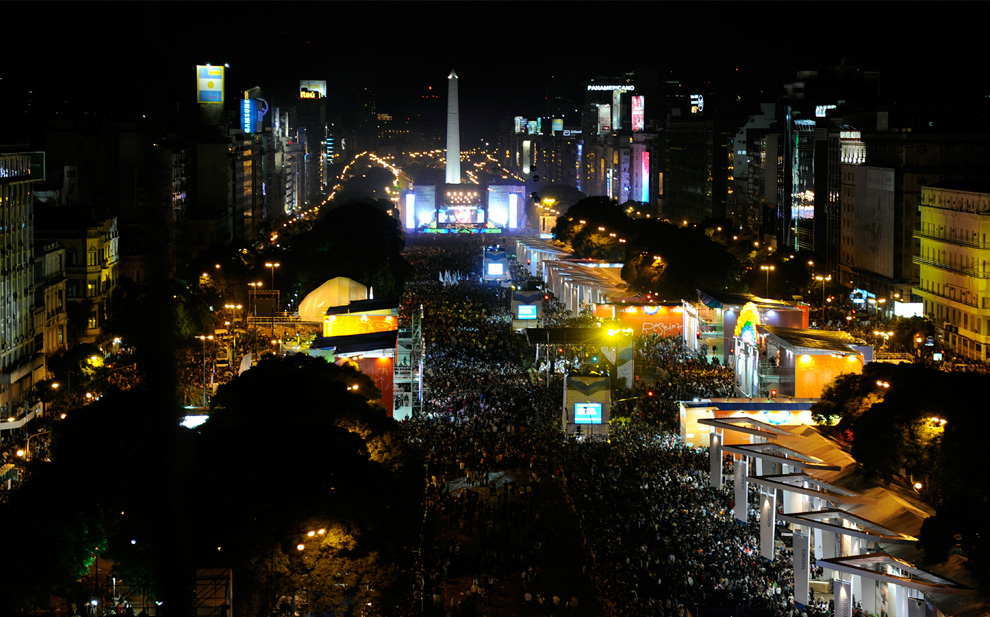
A few weeks ago was the Argentine Bicentennial and to celebrate they cut off the main artery of the city, 9 de julio (supposedly the widest boulevard in the world, at least the widest when it was constructed - I think it's about 8 or 9 lanes wide and it takes two lights to cross it) and had 4-1/2 days of festivals, parades, concerts, spectacles, fireworks, exhibitions, food stands, etc. In some ways it was like the state fair. only much more expensive, crunched into a couple of days, and with up to 3 million people.

It was the largest gathering of people in Argentine history.

Some items of note:

In a country that has a hatred against bolivians, paraguayans and peruvians similar in some ways to what you hear in the United States about Mexicans - theys steal our jobs, they don't bathe, get them out of our country... there was a beautiful moment.

One of the days included a parade of the different national/ethnic communities (depending on how you spin it) in Argentina. I don't know how many dozens of groups were there representing Mexico, Peru, Lithuania, Peru, Nigeria, Uruguay, Poland, Czechoslovakia, .. and sensibly, Bolivia as it is now the second largest immigrant population in Argentina.
And I thought it was going to be uncomfortable - it was hard for me to imagine porteños clapping and cheering while groups of bolivians danced in traditional dress and showed off their cultural pride. but it was great. there was only love <3 in the air at least from what I could see and clapping and general merriment was abound.

There were other moments like that where I expected tensions to arise. I thought there might be some backlash to the military parades, but again everything went over quite smoothly.

I learned some numbers: 250,000 Peruvians. 400,000 Polish. 300,000 Russians (the largest population in South America). I think the Mexican population was about 3,000.

There were some issues of course - like total lack of trashcans which meant spotting various dirty diapers laying on the ground to be trampled - yuck. But this grossness and possible hygiene disaster actually resulted from a really great thing. This event was the first time in a long while everyone says that families came out in mass. Most mass events in Buenos Aires are not usually seen as family friendly. But these were a few days where families took to the streets and parents showed and explained to their kids everything they saw, whether it be about the provinces (Argentina is made of 23 provinces like the US is made of states) or during the last parade to finish of the festival by a dance group called Fuerza Bruta portraying different historical periods of Argentina including tango, the economic crisis, its indigenous roots, the dictatorships (symbolized by a several story high metal Constitution that went into flames) and the War in Islas Malvinas. That parade was my favorite part.

I also can't count how many times I saw kids playing soccer with sprite bottles thrown out on the streets. Futbol was going to appear at the bicentennial - even if there were no soccer balls around.

For the best and most emblematic pictures of those few days (where I pulled the picture above) see...
http://www.boston.com/bigpicture/2010/05/argentinas_bicentennial.html

Thursday, May 20, 2010

Cranberries

remedies. we get born and raised into cultures where remedies for various illnesses are given as givens. not as cultural conclusions but universal scientific facts down to the nuclear reactions of this and that. Like feed a cold starve a fever. Have a sore throat or cold? No dairy products for you. In Cuzco, if we had sore throats they told us we had to wear scarves to protect our sensitive throats. Or, in the States, if you have diarrhea your diet should be BRAT (banana, rice, applesauce, toast). In Argentina BRAT changes by taking out the applesauce and adding rice and cheese. CHEESE?!?! In the American perspective if you have diarrhea, you definitely do. not. eat. cheese.

So imagine. You are in Argentina, you get a urinary tract infection. Which I didn't, this isn't the point of the story, but rather the example that made me ponder in the first place.

So, back to it. You are in Argentina. you've got a urinary tract infection. UTI. What do you do?

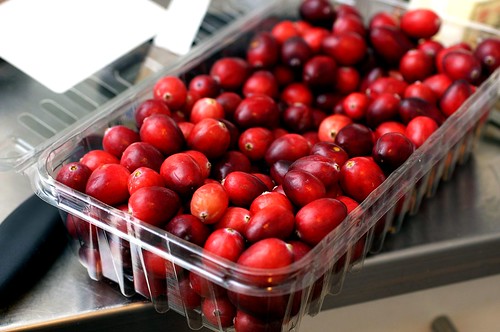
Cranberry juice. Cranberry juice. Cranberry juice.


We have all had the powers of the cranberry juice drilled into our brains as the magical cure (although I never found it has magical as proclaimed) for UTIs.

But what about the rest of the world, like Argentina, that doesn't have cranberries? There isn't even a word for cranberries really. Frutos de Bosque? ehh.. I can say blueberry, I can say blackberry, but cranberry? nope nope. SO What do they do? How is the rest of the world managing to survive their UTIs without the powerful cure that is cranberries!??


they take antibiotics. and I guess it's working out just fine. When I get a UTI, and I don't have my beloved cranberry juice, but instead have to result to actual medication, I'll let you know how the two size up and who's really got the magical remedy.

Wednesday, May 19, 2010

Colectivos


This morning my colectivo (public bus) had to do a three-point turn. I don´t think the narrow streets of my neighborhood were designed for 21st century mass public transportation.

Friday, May 7, 2010

Las vueltas de la vida

Ok, there have been quite a few months now of no-blog updates. My apologies to the five or so of you who love me so much to keep checking. But this time I had a pretty good (well decent) reason.

Since my Maguire fellowship ended, I have gotten a job. Which in itself has been quite a shift - paychecks every two weeks rather than a big lump sum for a year, actually having to look somewhat respectable, commute in the morning along with millions of other individuals in the subway or the bus, have lunch breaks and lunch meetings.
But more than just a job, I´m the program assistant of the SIT study abroad program Argentina: Human Rights and Social Movements that I did myself three years ago in the fall 2007.


It´s been great. I´m in contact with human rights organizations and travelling around the country. But the thing is, since most of my stories these days have to do with the program it obviously wouldn´t be right or professional to post stories that involved any of the 23 students here now, which, considering how much time we spend together, leaves me little to post about. That there is my excuse.


But it´s not a particularly good one.


Two weeks ago I got back from our two week trip to NOA (Northwestern Argentina). One of the most incredible experiences was visiting La Quiaca, Argentina - Villazón, Bolivia. These border towns are nothing like anything else in the world. This is a picture of what they call "contrabando hormiga," or ant contraband... Though its not illegal what they are doing, maybe it should be for the sake of their physical well-being. At this border town, to avoid paying taxes on the trucks that carry in goods from Bolivia into Argentina, the trucks stop at the border and have groups of organized Bolivians carry their goods from one side to the other. This movement of smaller quantities of goods by individual persons is not taxed.


So for a few hours a day, bolivians move as quickly as they can back and forth carrying loads on their backs of around 100 kilos. Which, for those of you not used to kilos... is an incredible amount. I weigh 60 kilos. Over time, carrying this amount of weight has deformed the bodies of many of the women who you´ll see permanently bent over and bow legged.

After studying the US - Mexico border, this is the most extreme opposite I´ve ever seen. Talk about permeable. It´s further proof that human rights issues can spring up not only in intensely militarized border zones like ours but in the most permeable regions as well. Closed or open border policies in themselves are too simple to guarantee that human dignity will be respected.

It´s much more complicated, and there´s much more to say, but it´s a start..